Global Time Zones, UTC Offsets, and the International Date Line
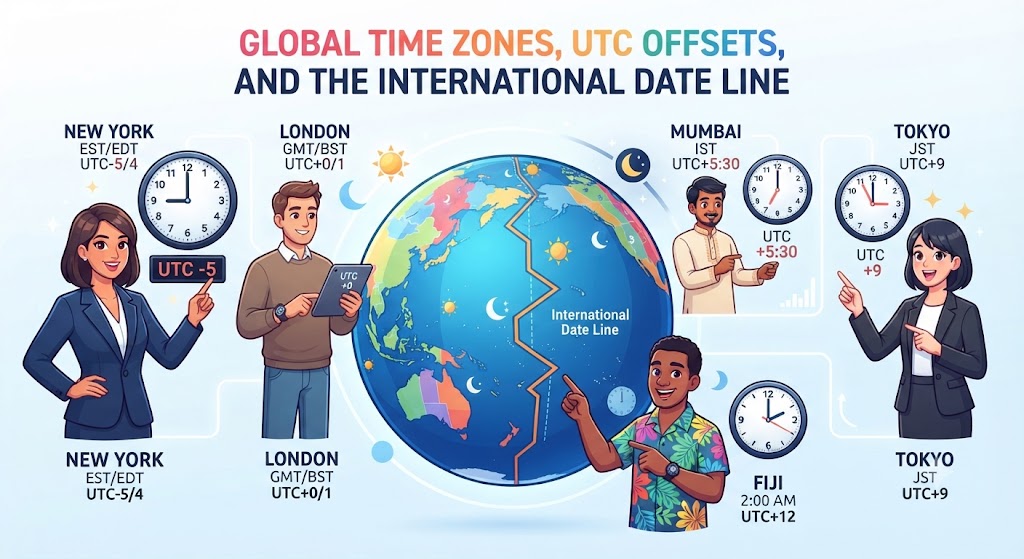
Time is one of the most fundamental yet artificial frameworks governing human civilization. In the pre-industrial world, human settlements lived by local solar time: midday occurred when the sun reached its highest zenith in the local sky (solar noon). However, the nineteenth-century advent of the steam locomotive, electric telegraph, and global maritime networks made local … Read more
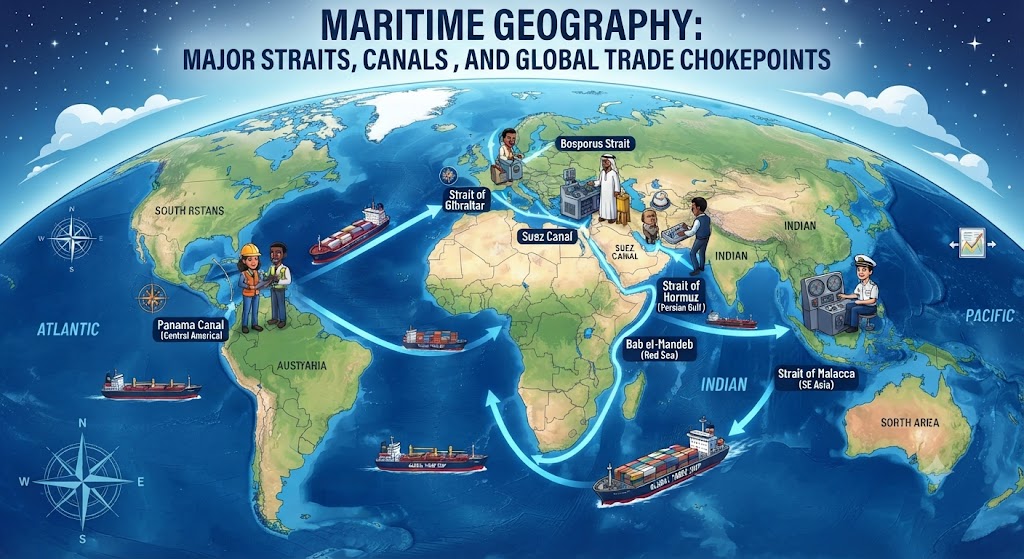
Maritime Geography Major Straits, Canals, and Global Trade Chokepoints

Over 80 percent of the world’s commercial merchandise by volume and more than 70 percent by value travels across the global ocean. While the high seas appear vast and unconstrained, maritime commerce is fundamentally channeled through narrow, geographically constrained corridors known as chokepoints. These critical natural straits and engineered artificial canals represent the jugular veins … Read more

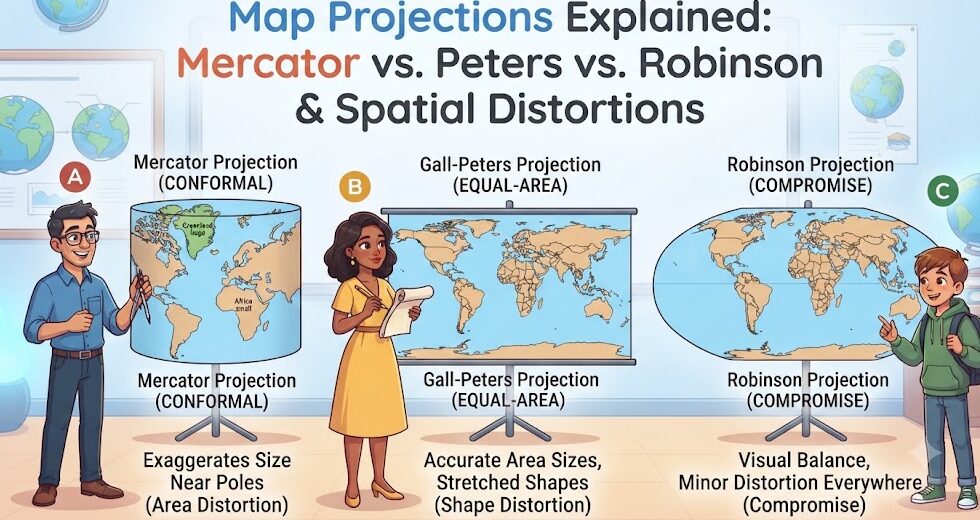
Map Projections Explained Mercator vs. Peters vs. Robinson & Spatial Distortions

Every two-dimensional map of the Earth represents a fundamental mathematical compromise. Because the Earth is a three-dimensional oblate spheroid—slightly flattened at the poles and bulging at the equator—it is physically impossible to flatten its surface onto a plane sheet of paper or computer screen without introducing distortion. Cartographers refer to this mathematical reality through Carl … Read more

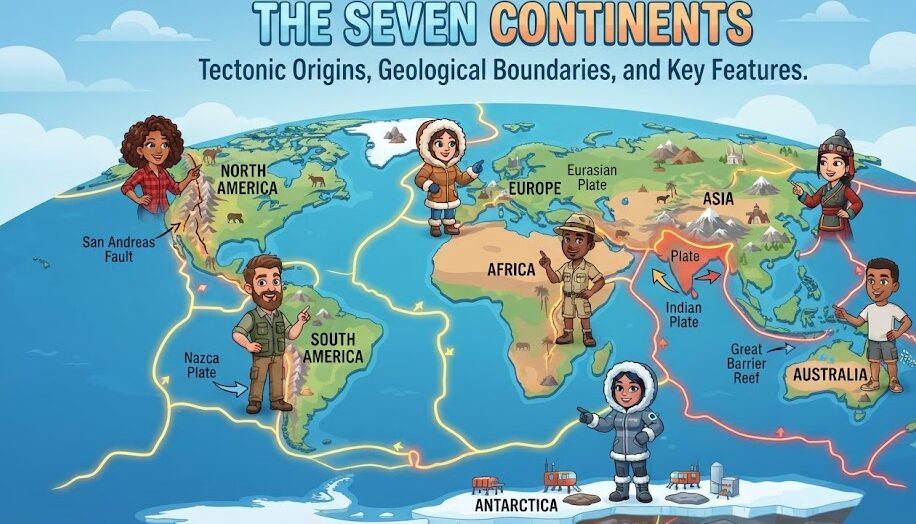
The Seven Continents Tectonic Origins, Geological Boundaries, and Key Features

The division of planet Earth’s land surface into distinct continents is one of the foundational conventions of global geography. Yet beneath this seemingly elementary classification lies a complex interplay of deep-time plate tectonics, continental crustal composition, shifting sea levels, and historical human geopolitics. While educational systems across the English-speaking world predominantly teach a seven-continent model … Read more